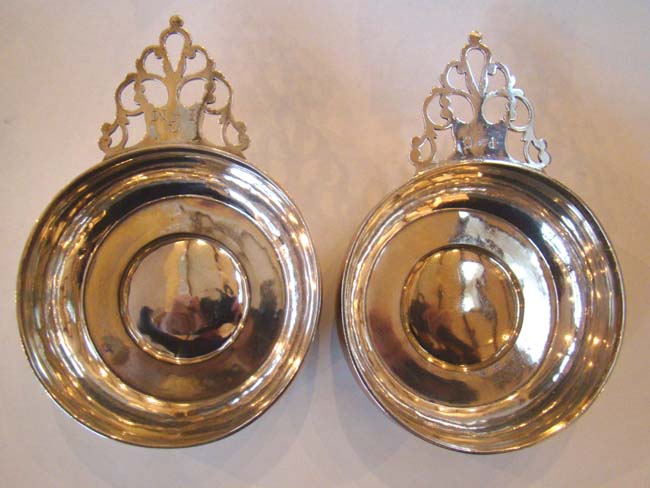
CLICK TO ENLARGE
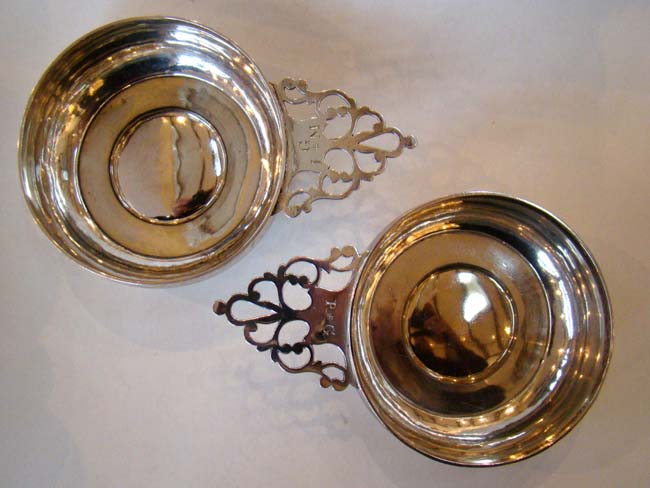
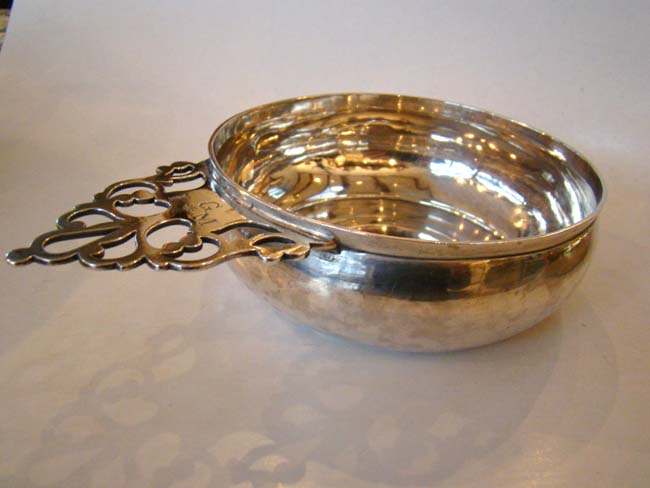
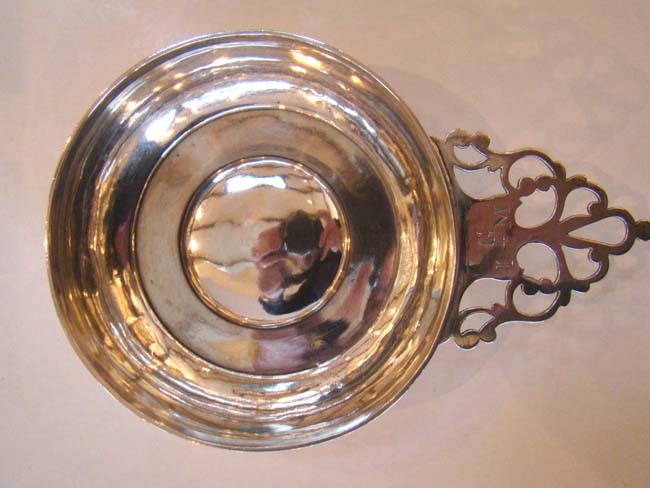
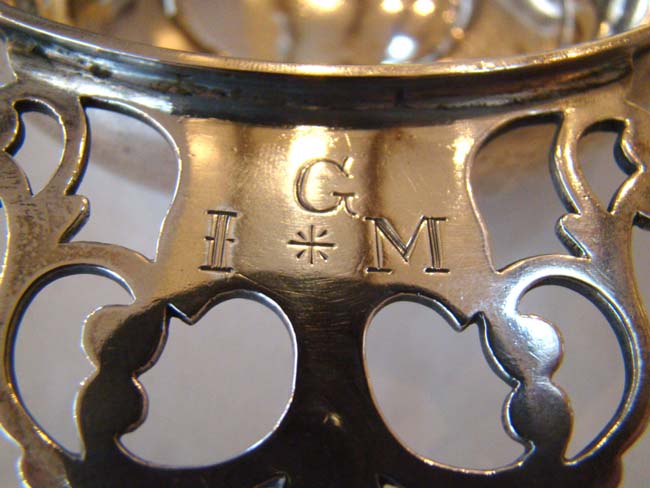
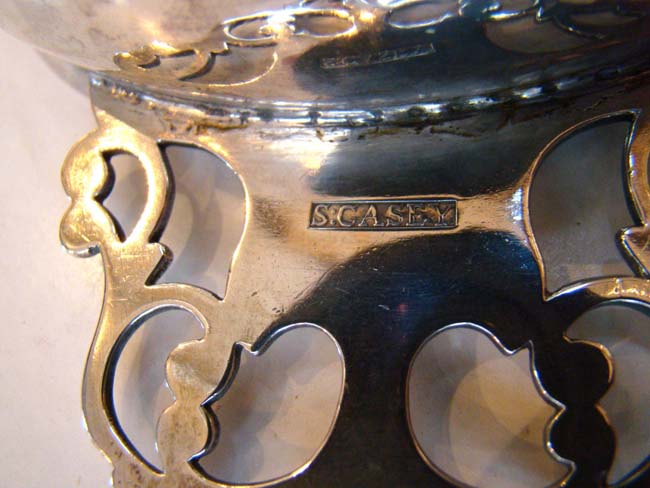
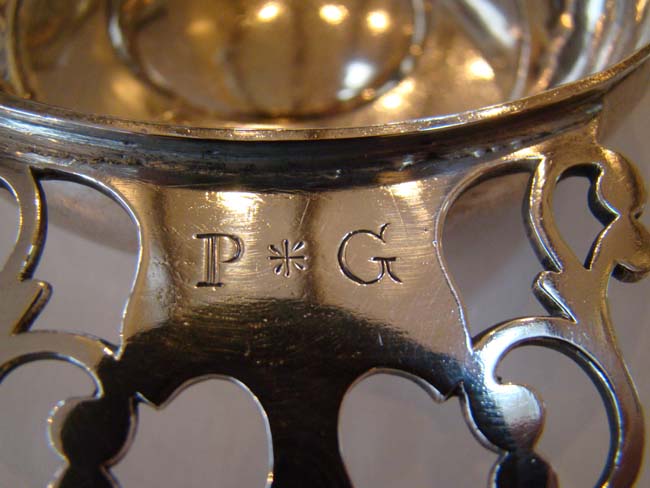
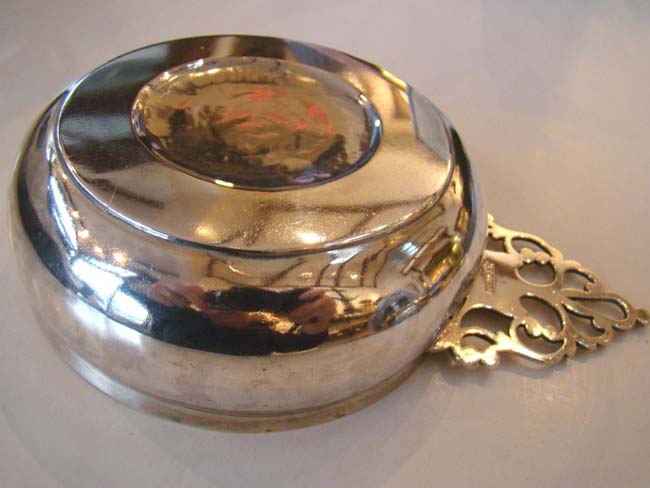
Engraved on the pierced keyhole handle of one are the initials "I M G" for John Greene (1686-1758) and Mary Greene (1687-1783) of Warwick, Rhode Island. Engraved on the handle of the other are the initials "P G" for Phebe Greene (1728-1752), daughter of John and Mary. On the reverse side of the handle on each is the name "S.CASEY." Each porringer measures 5 3/8" in diameter with the overall length 7 5/8" and weighs approximately 8 ounces. Provenance: by descent to Charles Henry Allen and Ellen Louise (Clapp) Allen, thence to Howard Vernon Allen (1878-1969) who then passed it on to Vernon Sterns Allen (1906-1983). There is an additional genealogy available as well references in the book "The Greenes of Rhode Island" by G.S. Greene and L.B. Clarke published in New York in 1903. Historical notes about Samuel Casey: He was born in Exeter, Rhode Island in 1724 and died sometime around 1779. In 1737 he was apprenticed to Jacob Hurd in Boston and in 1745 was working as a silversmith in Exeter. Records show that he moved to South Kingston in 1750. In 1770, he was arrested for counterfeiting dollars, was tried and sentenced to death by hanging. In November 1770, crowds break into the 'gaol' setting free criminals 'lately convicted of making money' including Casey. In 1779, his wife Martha petitioned the General Assembly for a pardon and amnesty stating that her husband 'wandered in exile for 9 years forlorn, forsaken and destitute, separated from his wife and offspring.' He was subsequently pardoned and discharged from 'all treason, felonies and other offenses done before April 19, 1775.' Most of Casey's surviving pieces are on display at the Museum of Fine Arts in Boston, Yale University and the Huntington Library.


