CLICK TO ENLARGE
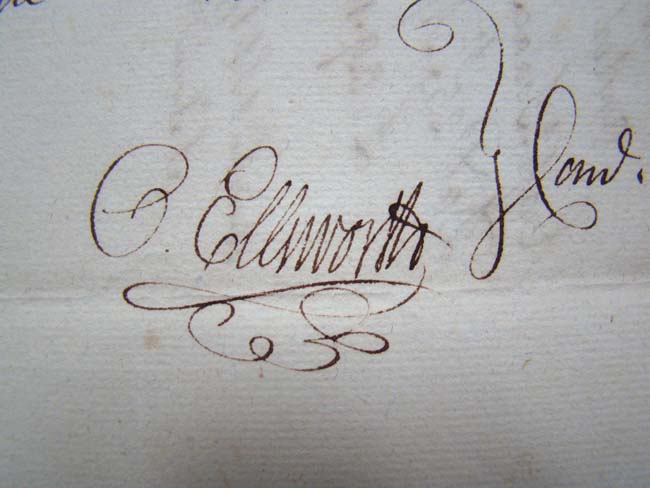
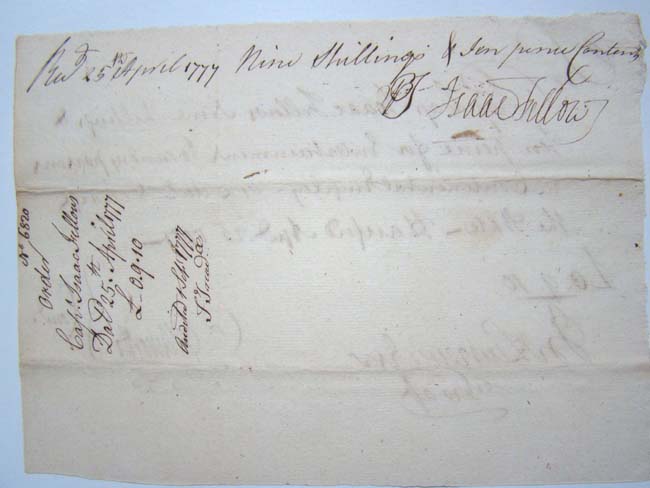
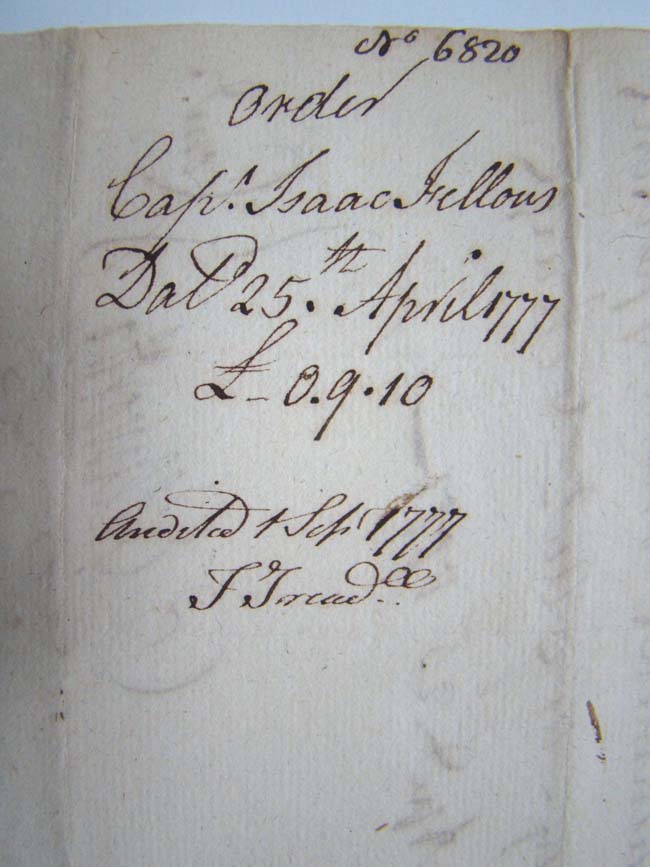
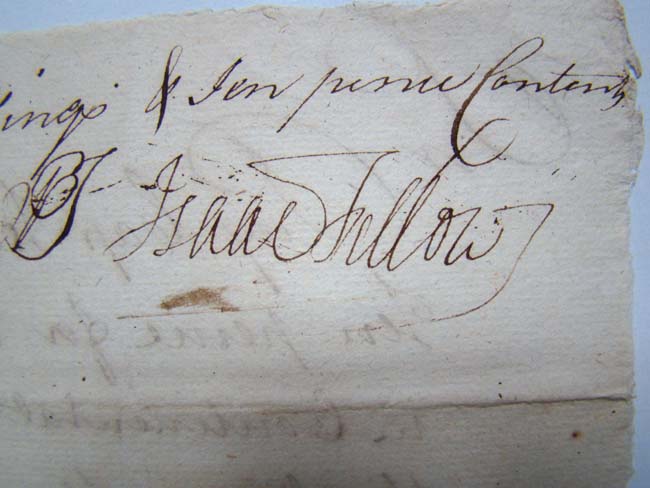
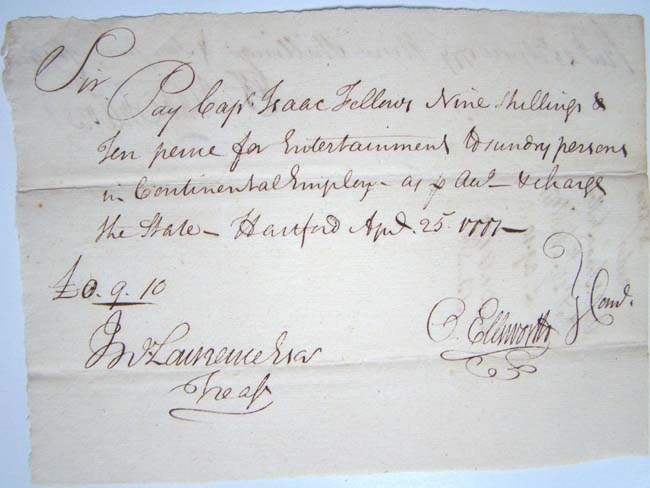
This rare letter on laid paper reads "To John Lawrence, Sir, Pay to Capt. Isaac Fellows nine shillings & ten pence for Entertainment to sundry persons in Continental Employ as per Acct-& charge the State. Hartford April 25, 1777." Signed by future Governor John Treadwell, Treasurer of the State of Connecticut John Lawrence, Capt. Fellows and Oliver Ellsworth. Ellsworth's resume is as follows: He served on the Committee of the Pay Table from 1775-1777, was Connecticuts' attorney for Hartford County from 1777-1785, a member of the Continental Congress from 1778-1783, Delegate to the Federal Constitutional Convention in 1787, U S Senator from Connecticut from 1789-1796 and appointed Chief Justice of the U.S. Supreme Court by George Washington from 1796-1799. Ellsworth also helped to draft the Bill of Rights. HISTORICAL NOTE: On the day this document was signed on April 25, 1777, British forces landed at the mouth of the Saugatuck River between Fairfield and Norwalk, Connecticut. About 1,800 British troops marched from there to Danbury. British General William Howe had ordered Major General William Tryon, Royal Governor of New York, to destroy the Continental military supplies stored at Danbury. They did succeed in destroying those supplies after chasing off a small garrison of troops. When word of the British troop movement spread, Brigadier General Benedict Arnold raised a combined force of roughly 700 Continental Army regular and irregular local militia forces to oppose the British, but could not reach Danbury in time to prevent the destruction of the supplies. Background on Isaac Fellows: He answered the historic Lexington Alarm of April 19, 1775 and marched from Bolton, Connecicut. He subsequently served in Backus' Regiment of Light Horse. On April 26, 1775, the Connecicut Assembly appointed officers for the six regiments 'raised for he defence and safety of the Colony' including Isaac Fellows as First Lieutenant, Second Company of the Fourth Regiment. The same day, Benedict Arnold was appointed Captain of the Fifth Company in the First Regiment. A rare document now beautifully preserved in a double sided frame.